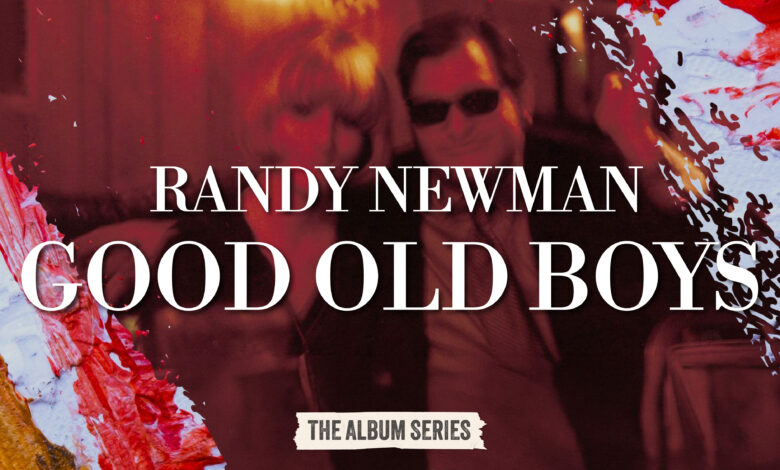
Hey all! Time for our third Sunday Session — and this time we dive deep into the ’70s and the American South, with Randy Newman’s masterful Good Old Boys.
This album should not work. A Jewish guy from Los Angeles goes deep into the white Southern working-class – what could go wrong? But somehow it not only works, it’s an all-time great album.
Newman loves the South. He looks at the people there with compassion and genuine affection, but refuses to look away from the worst of it – the rampant racism, the poverty, while keeping track of the biggest picture, such as the indifference of American power toward the region and its people. He inhabits his subject matter with enough empathy that the contradictions become impossible to look away from. It’s a fascinating portrait, unafraid of controversy, and it takes you on an emotional and historical journey like few other albums.
Click on the visualizer to download!
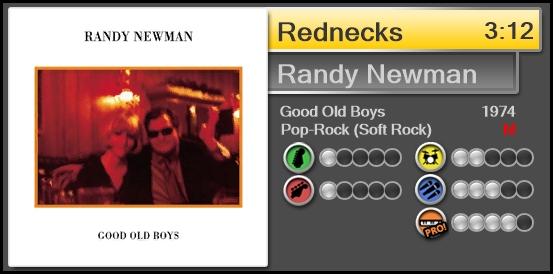
The opener, Rednecks, is quite a rollercoaster. Our narrator is introduced watching Lester Maddox -Georgia’s segregationist governor – get mocked on the Dick Cavett show, and goes on the defensive: he might be a fool but he’s our fool, and if you think you’re better than him, you’re wrong. What follows is a song that commits fully and uncomfortably to its narrator’s racist worldview (fair warning, it includes very free use of racial slurs). But midway through the song, Newman then flips the script, attacking the hypocrisy of Northern states and their treatment of Black communities – physically free but economically confined in segregated poverty, just without the legal paperwork. You can argue if this song aged well or not, and it’s surely a provocation, but it’s also a brilliant piece of satire that announces this album with a bang and establishes that this is no regular album.
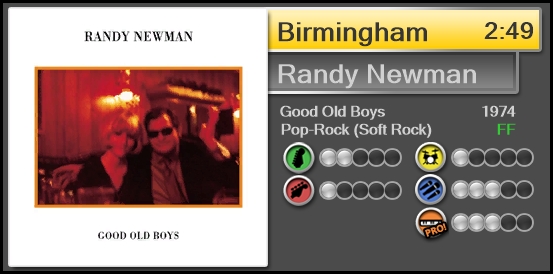
From there we dive deep. Birmingham is a love letter to the city – honest, sincere, and with an alarming absence of cynicism. The subtext of what actually happened in Birmingham at that time – Bull Connor, fire hoses on protesters, the 16th Street Baptist Church bombing – goes completely unmentioned. It’s a lovely song in a way, and there’s nothing wrong with a man loving his city. But it also quietly comments on how a decent person’s focus on their own small world can coexist with, and silently enable, horrors happening right around them – without ever once acknowledging them.
In Mr. President (Have Pity on the Working Man), Newman takes a step back. In a direct address to the American president – no irony, no cynicism – he embodies a working man asking simply to be seen. The narrator isn’t angry or threatening, not demanding revolution or justice in any grand sense. He just wants to be acknowledged and pitied. And he connects to a long history of American governments treating the South and its people as an afterthought. Guilty moves from the national to the personal. A broken, cruel, drunk man appeals to his loved one – who “can’t stand him,” but he had “nowhere else to go.” He knows exactly how guilty he is, but the self-awareness doesn’t lead anywhere. It’s a deeply emotional and beautiful song, that portraits the personal damages of the small people and relationships in the region.
Now we arrive at the emotional centerpiece of the album, and probably its best song. Louisiana 1927 is a straight elegy for the Great Mississippi Flood of that year, which devastated poor communities across Louisiana. It tells the story of the tragedy, communities destroyed, federal indifference, “they’re trying to wash us away”, nature and government alike. It’s one of the most beautiful things Newman ever recorded, and it took on an entirely new and painful resonance after Hurricane Katrina decades later.
Continuing the Louisiana thread, Kingfish dives into the story of Huey Long – the charismatic populist governor who rose to power on the back of this very tragedy. The song is preceded in the album by a singalong of Long’s actual campaign anthem, Every Man a King – an utopian promise of prosperity. Kingfish then gives us Long himself as narrator. And as always in this album, the double meanings galore and the picture is complex. Long was genuinely effective – he built roads, schools, hospitals. He gave the poor Louisianans the recognition and attention they were asking for in Mr. President. But he was also corrupt, a populist and ultimately used it as a way to gain wealth and power.
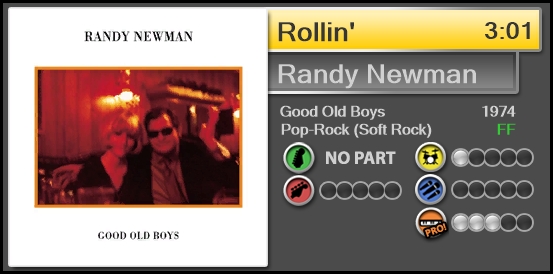
Finally – after a few more beautiful portraits and sharp songs I’d strongly recommend exploring on the full album – we close on Rollin’. A man in a chair, declaring he never drinks alone before doing exactly that, watching his troubles dissolve into the air. He used to worry about alcohol, gambling, wasting time. Not anymore. “I never thought I’d make it, but I always do somehow”. A positive message on paper. But the bar for making it has collapsed entirely to just surviving another day in the chair. Lonely, drunk, poor – but still here.
As per tradition, bonus tracks time!
Have You Seen My Baby (12 Songs, 1970) is looser and more playful than anything on Good Old Boys – an early Newman at his most straightforwardly fun and rocking. Last Night I Had a Dream (Sail Away, 1972) is the stranger companion: surreal and quietly unsettling while still sounding like a gentle pop song, and includes some great slide guitar playing.
Lonely at the Top (Sail Away) is a real favorite of mine. He wrote it specifically for Frank Sinatra – a song about a hugely successful entertainer superstar finding fame empty and isolating. Sinatra passed on it, maybe finding it hit too close to home, or not the image he wanted to project, so Newman did it himself. And it became one of his greatest classics (also – check out “Political Science“, another classic from this record which I previously authored).
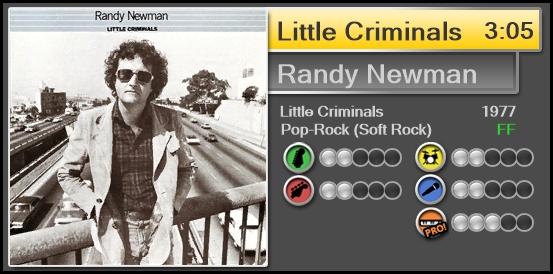
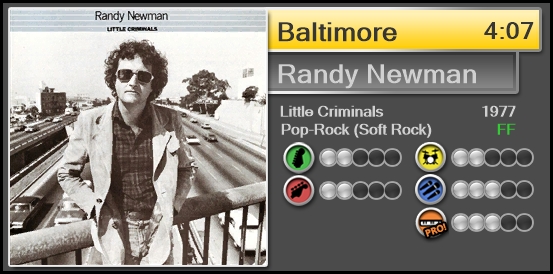
And finally, Little Criminals (1977). Mostly known for the hit “Short People” (here authored by mrcoupdetat), but it’s a great album all the way through. Baltimore sits in direct thematic conversation with Good Old Boys – another portrait of an abandoned American city, another community the country has decided not to see, but rendered with that slightly harder and more edgy style that characterizes Newman’s late-70s work. Little Criminals represents that same era well: more Hollywood-inflected, sharper, a different color from the warm Southern elegy of this album but still unmistakably him.
Phew! That’s it for today, see you next week for another Sunday Session!
And next time – we’re going back to where it all started, for my favorite legend of all…